01 / ADVISORY
Delivery and AI readiness
Find the first workflow worth improving. Map the people, hand-offs, data gaps and exceptions before selecting the technology.
Output: A prioritised problem map and first-module scope.
For UK contractors, developers, consultants and project leaders. Translate practical delivery knowledge into AI workflows that support programme, commercial control and clear decisions.
People who understand delivery should lead the design of your AI.
A smooth project shows what to repeat: a clear brief, coordinated information, timely decisions and a team that understands its responsibilities. A difficult project reveals what a system must be able to recognise: missing evidence, conflicting instructions, fragile assumptions and a decision that cannot wait.
Both belong in the design. A consultant should be able to explain the work, the consequences of getting it wrong and the checks that keep people in control. Technical specialists then turn those requirements into a dependable system.
Experience sets the requirements. Engineering implements them. Evidence tests whether they work.
Choose the support your team needs. Begin with one defined scope, agree the deliverables and expand after the first workflow has been tested.
Find the first workflow worth improving. Map the people, hand-offs, data gaps and exceptions before selecting the technology.
Bring project status, responsibilities, evidence and decisions into a shared view around your actual reporting needs.
Structure variations, cost information, payment evidence and missing approvals so the right people can assess the position.
Turn repeatable delivery lessons into instructions: required inputs, checks, stop conditions, human decisions and retained evidence.
Define access, approved sources, action limits and review responsibilities. Assess the integrations your workflow actually requires.
Test ordinary work, difficult exceptions and increased demand. Train users, agree acceptance criteria and review the system as work changes.
Scope, delivery responsibilities, fees and timing are agreed for each engagement. Configuration, custom development, integrations and third-party licences may be required.
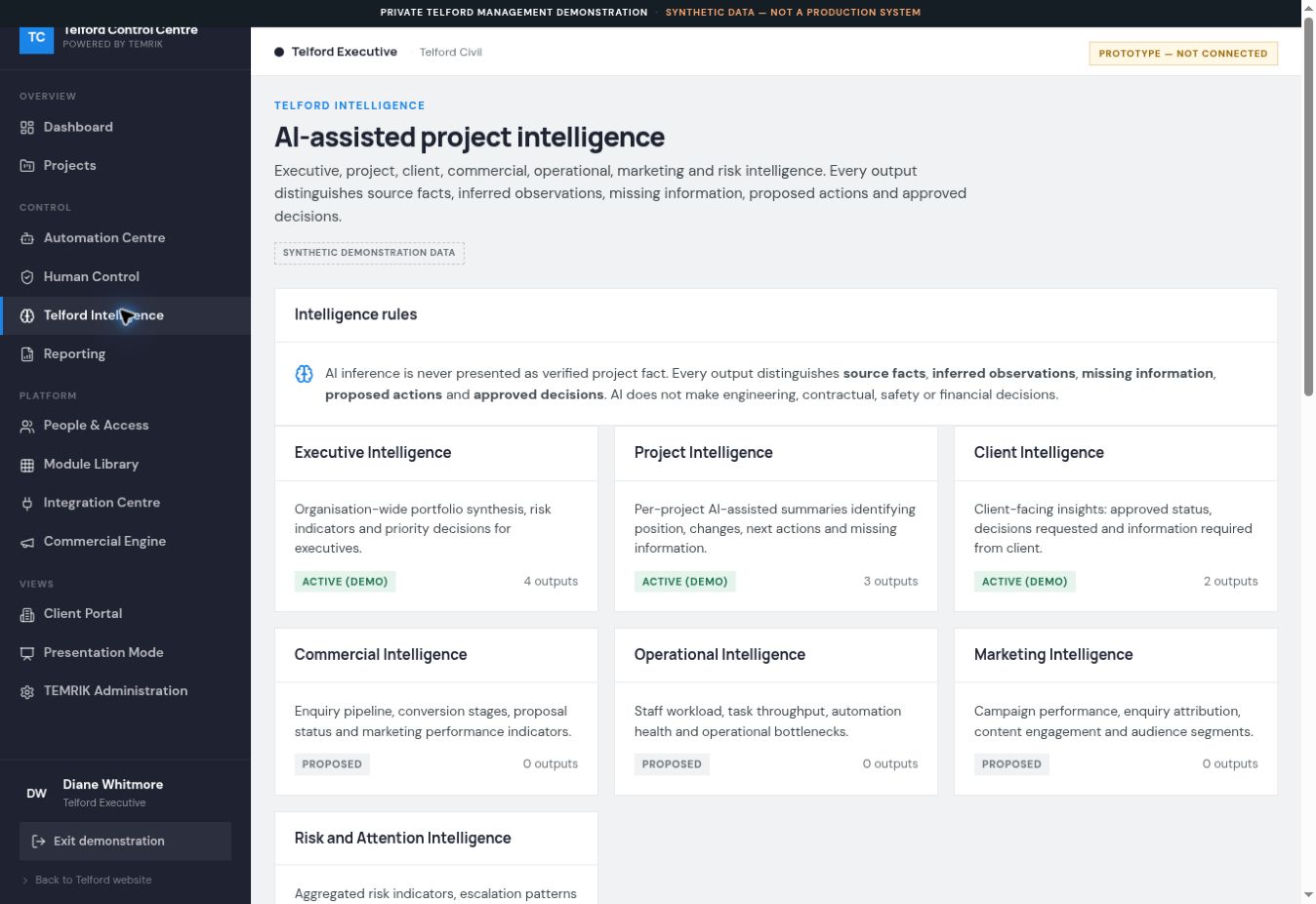
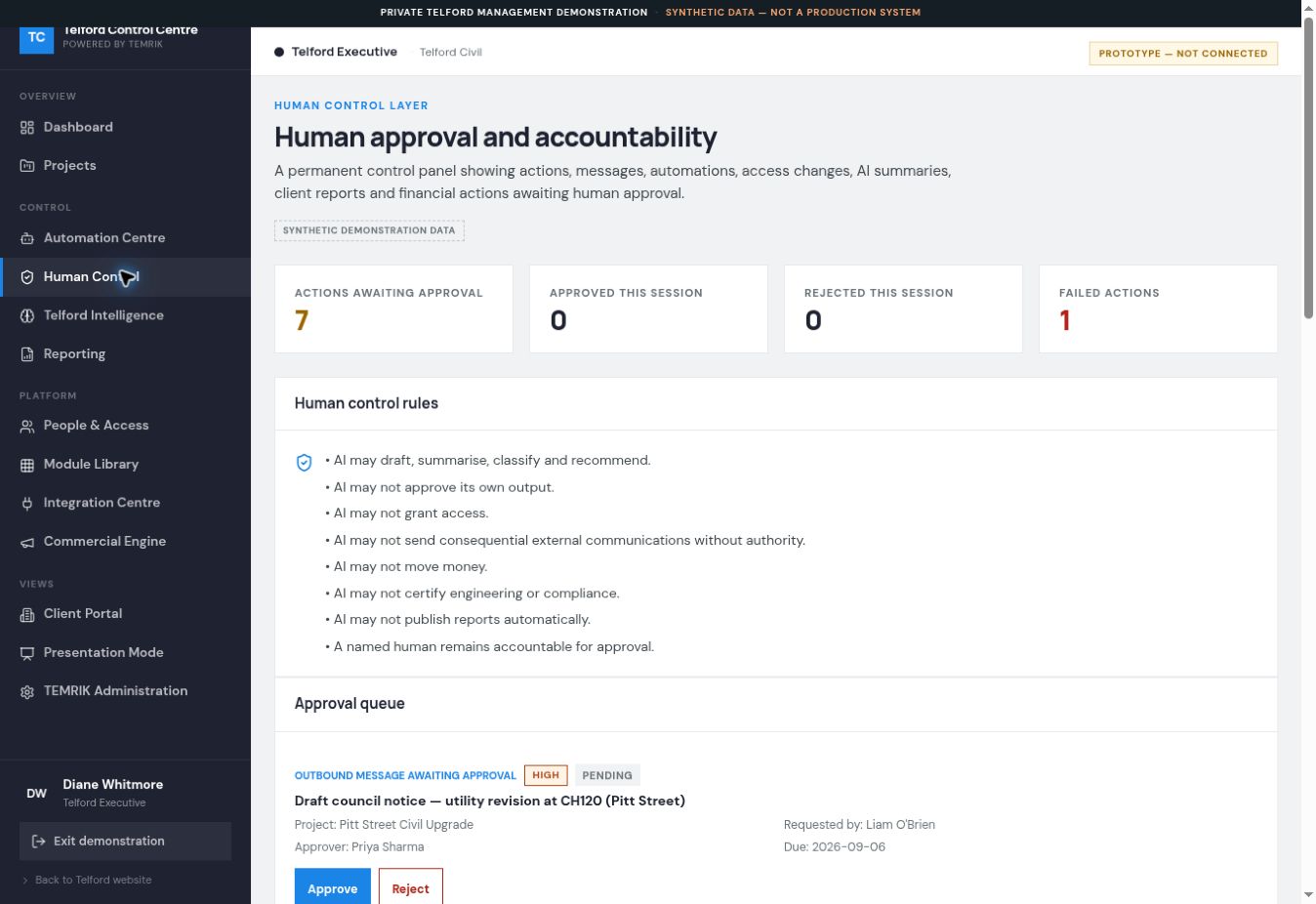
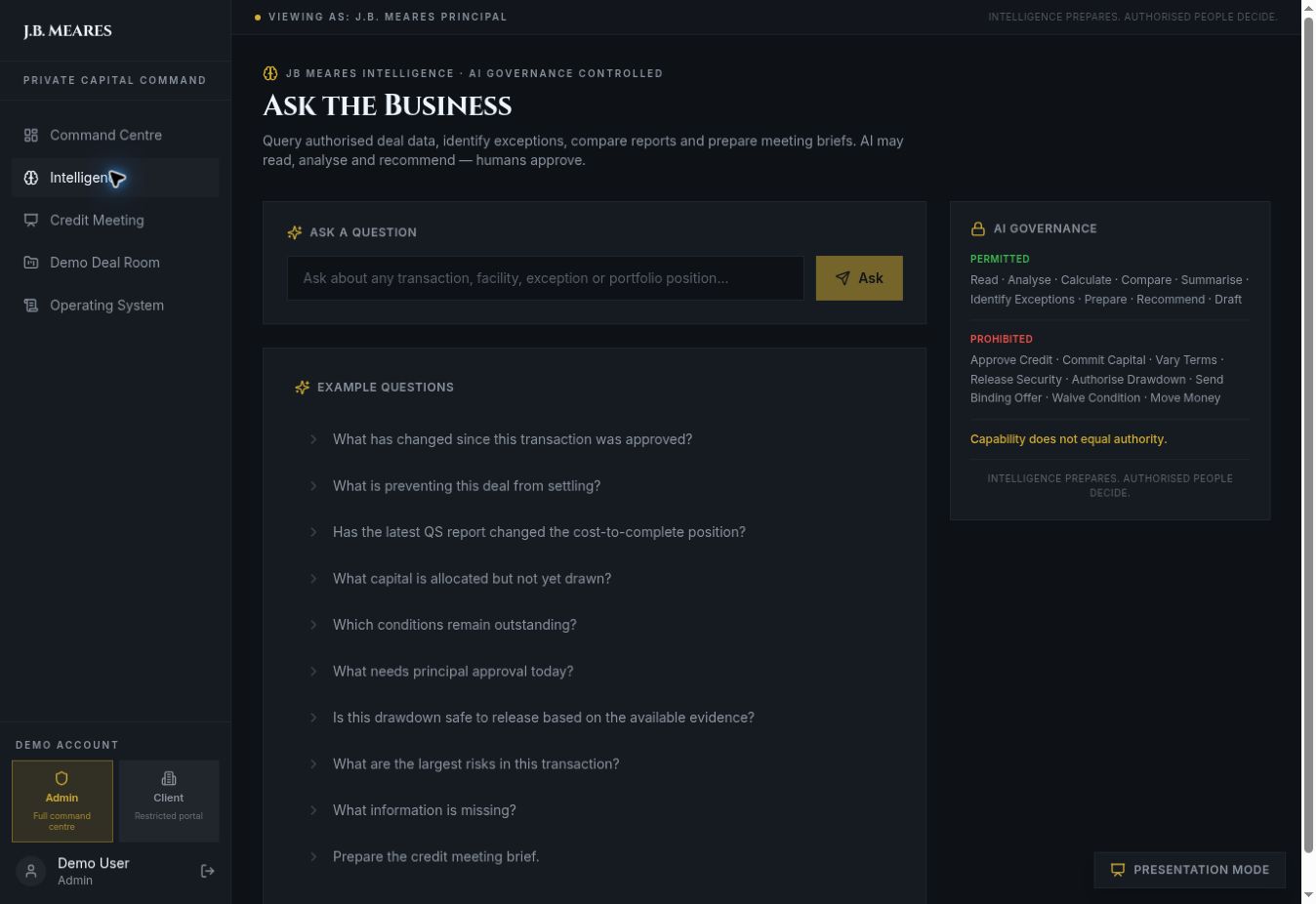
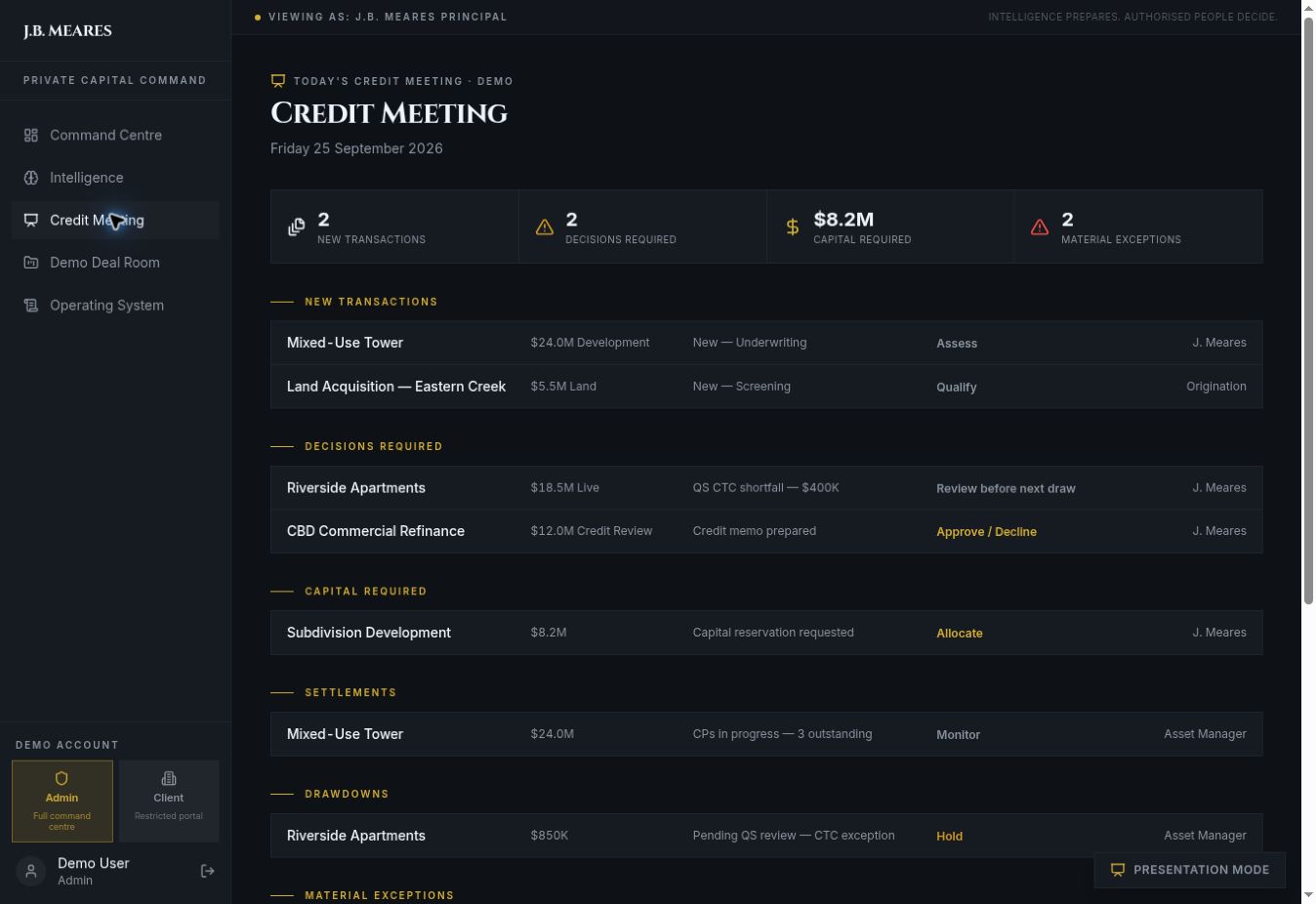
Explore two interfaces that show how project information, intelligence and accountable decisions can fit together.
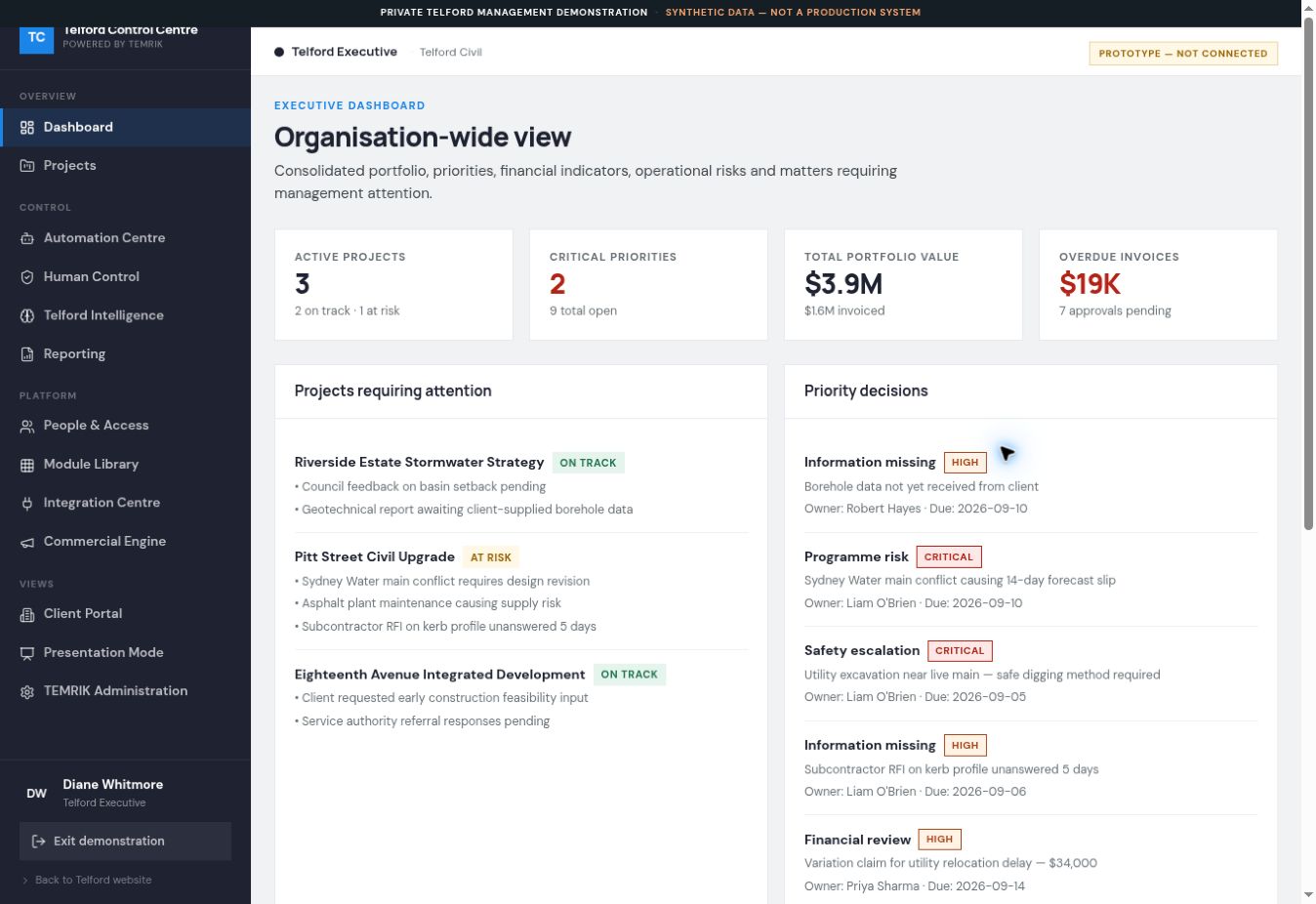
Portfolio priorities, project intelligence and human review in a role-based construction interface. Proposed integration; not a connected production system.
See how Telford works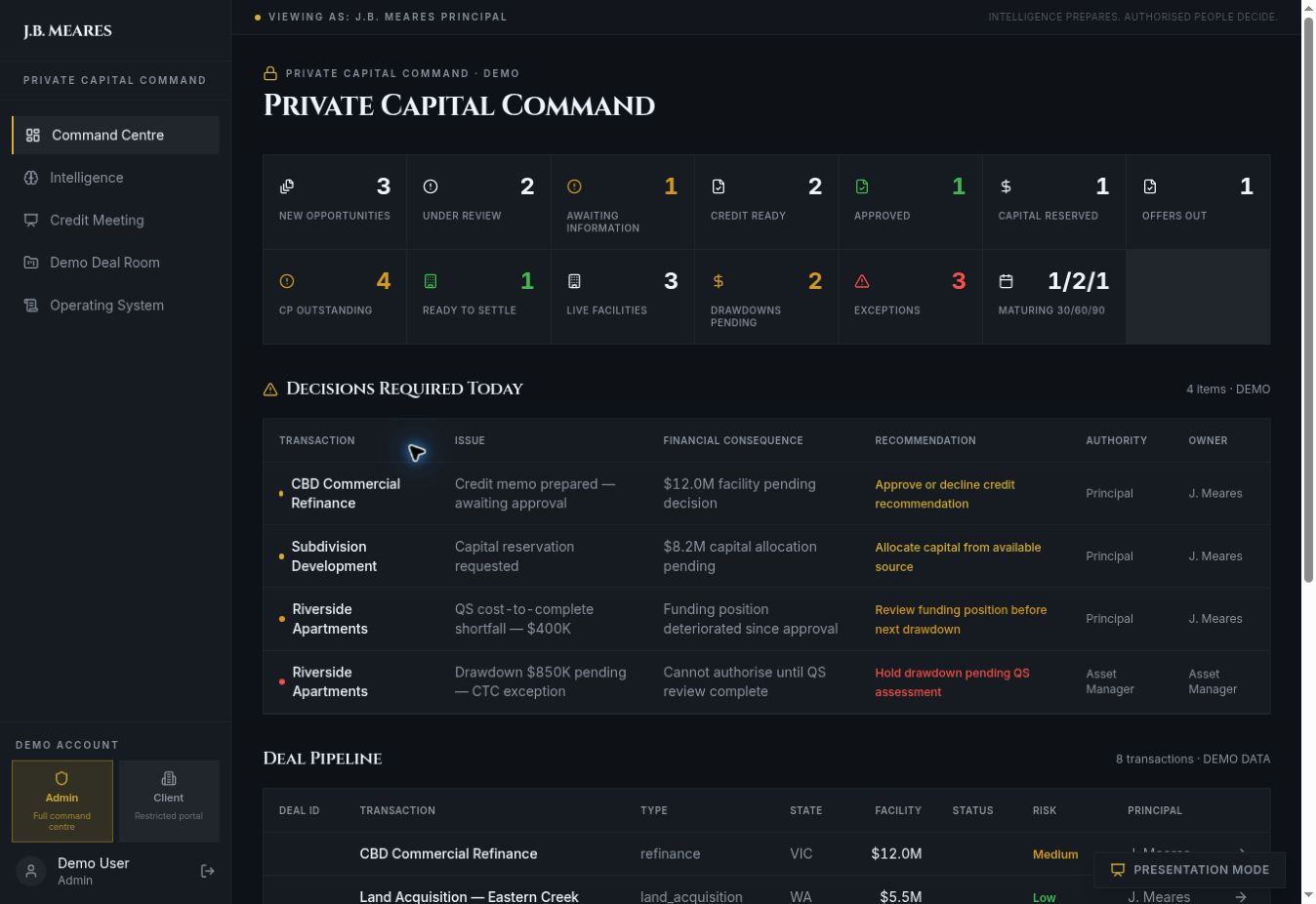
Transaction status, commercial exceptions and decision owners in one interface. A demonstration of the operating concept, not evidence of lending or delivery outcomes.
Explore the commercial workflowReal screenshots of working demonstration interfaces. All project figures, people and transactions shown are synthetic or fictional. These are capability previews, not client results.
Start with your actual contract, programme, change process and appointments. Keep professional and statutory decisions with the people authorised to make them.
More work creates its own pressure: more decisions, more handovers and more opportunities to lose context. Test the workflow under growth as well as disruption.
Review one successful example and one difficult example. Find the decisions, missing inputs and recovery steps.
Specify sources, owners, permissions, stop conditions and what must reach a qualified person.
Test conflicting records, absent approvals, an unavailable service and a sudden increase in workload.
Review exceptions and user feedback. Update the playbooks and retest changes before wider activation.

Start with six construction workflows. Read the rules, adapt them to your work and keep human approval built into the process.
Browse the free playbooksPublic preview · Markdown files · No account required to read. Use Code, then Download ZIP in the repository. Adapt and test before operational use.
Start by mapping what already works. An advisory engagement can identify where to configure an existing system, connect approved sources or build a focused module. Integration feasibility is checked during scoping.
Workflow design depends on understanding what information means on a real project, how responsibilities interact and when an apparently routine issue requires escalation. Delivery experience should inform the requirements alongside technical, security and relevant professional expertise.
Those responsibilities remain with appropriately authorised people. The proposed system may organise evidence and prepare a recommendation. Its permissions and approval gates must be designed, implemented and tested before any consequential action is enabled.
No. The screenshots show working demonstration interfaces. Telford is a prototype with synthetic records; J.B. Meares uses fictional transactions. They illustrate workflow design, not verified production outcomes, endorsements or performance claims.
Let’s define the evidence, the decisions and the first workflow worth building.
Talk through your priorities
TEMRIK Failure Intelligence explores 25 patterns that help teams think through what could go wrong before committing to a decision.
Free PDF · Educational guidance. Apply it to the scope, evidence and professional requirements of your project.